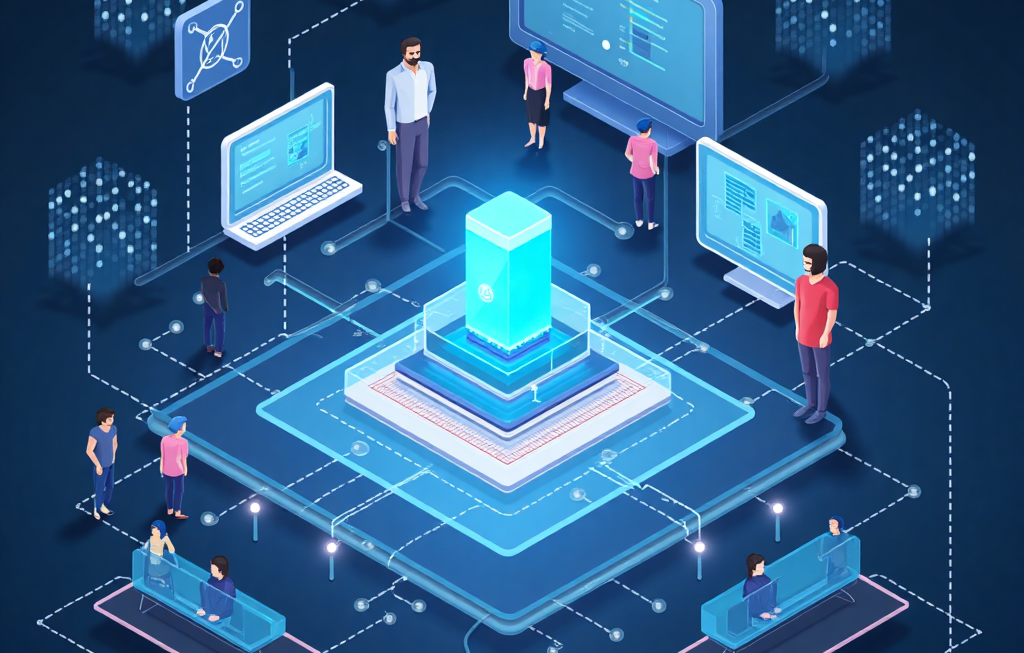
Artificial intelligence has moved beyond simple data analysis and into the realm of visual creativity, fundamentally changing how we produce and consume images. AI image generators such as DALL·E, Midjourney, Stable Diffusion, and Adobe Firefly can turn a short text prompt into a detailed, often breathtaking image in a matter of seconds. For marketers, designers, educators, and hobbyists, these tools offer unprecedented speed, accessibility, and creative possibility. Yet behind the stunning visuals lies a complex web of ethical concerns that society is only beginning to untangle.
As these tools become embedded in everyday workflows—from advertising campaigns to classroom projects—questions about authorship, consent, bias, and economic fairness have become impossible to ignore. The very same technology that empowers a small business owner to create a logo without hiring a designer also raises alarms about the unauthorized use of artists’ work, the spread of misinformation, and the erosion of trust in visual media. Understanding both the practical applications and the ethical dimensions of AI image generation is essential for responsible use.
This article explores how AI image generators work, where they are being used, the benefits they offer, and the serious ethical issues they raise. It also outlines practical guidelines for individuals and organizations that want to harness the power of AI-generated imagery without crossing moral or legal boundaries.
Understanding AI Image Generators
AI image generators are powered by deep learning models trained on massive datasets of images and text captions. When a user enters a prompt such as “a watercolor painting of a fox in a forest at dawn,” the model interprets the words and generates an image that reflects the requested style, subject, and composition. The most common architecture used in these systems is called a diffusion model, which gradually refines random noise into a coherent image based on the input text.
How Do They Work?
At the core of most modern AI image generators is a process known as latent diffusion. The model is trained to recognize relationships between words and visual features by analyzing billions of image-text pairs scraped from the internet. During generation, the system starts with a field of visual noise and iteratively removes that noise while conditioning the output on the text prompt. The result is an image that often appears original, even though it is statistically derived from patterns found in the training data. This technical achievement is remarkable, but it also forms the basis of many ethical disputes, because the training data often includes copyrighted artwork and personal photographs used without explicit permission.
Where Are They Used?
The versatility of AI image generators has led to rapid adoption across many sectors. Common applications include:
- Marketing and advertising: Creating social media graphics, product mockups, and campaign visuals without the need for costly photoshoots.
- Content creation: Generating blog featured images, YouTube thumbnails, and podcast cover art quickly and affordably.
- Design and prototyping: Exploring visual concepts for logos, packaging, and interior design before committing to a final direction.
- Education: Producing custom illustrations for presentations, lesson plans, and academic materials.
- Entertainment: Developing concept art for games, films, and personal creative projects.
- Accessibility: Assisting people with limited artistic skills or physical disabilities in expressing visual ideas.
These use cases demonstrate that AI image generators are not merely novelty toys. They are becoming integral to professional workflows, making the ethical questions surrounding them all the more urgent.
The Creative Benefits of AI Image Generation
Before diving into the ethical concerns, it is important to acknowledge the legitimate advantages these tools provide. AI image generators have genuinely expanded the boundaries of what individuals and small teams can accomplish visually, often with limited time and resources.
Speed and Efficiency
Traditional image creation—whether illustration, photography, or graphic design—requires time, skill, and often expensive equipment or software. AI image generators compress that timeline dramatically. A marketing team can iterate through dozens of visual concepts in an afternoon rather than waiting days or weeks for a designer to produce mockups. This speed allows businesses to respond quickly to trends, test creative directions, and maintain a consistent flow of visual content.
Democratization of Visual Storytelling
Perhaps the most celebrated benefit of AI image generation is accessibility. People who have never held a paintbrush or mastered Photoshop can now bring their imaginative visions to life. Small nonprofit organizations with limited budgets can create compelling visuals for awareness campaigns. Independent authors can commission realistic character portraits without spending thousands of dollars. In this sense, AI image generators level the playing field, allowing more voices to participate in visual culture.
Creative Inspiration and Augmentation
Many professional artists use AI tools not to replace their work but to enhance it. They may use generated images as reference for lighting, composition, or color palettes, or to overcome creative blocks. When used as a collaborative assistant rather than a replacement, AI can expand an artist’s toolkit and open up new avenues for experimentation that were previously too time-consuming or technically difficult.
The Ethical Landscape: Six Critical Issues
Despite these benefits, the rapid proliferation of AI image generators has given rise to significant ethical challenges. These issues are not abstract; they have real-world consequences for artists, individuals, and society as a whole. Understanding these concerns is the first step toward responsible use.
1. Copyright Infringement and Artistic Ownership
The most widely debated ethical issue involves the use of copyrighted material in training AI models. Many AI image generators are trained on enormous datasets scraped from the internet, including artworks by living artists, stock photography, and images protected by copyright. In most cases, the original creators were never asked for permission, credited, or compensated. This has led to multiple lawsuits from artists and stock photo agencies who argue that their work is being exploited to build commercial products.
The situation is complicated by the fact that AI-generated images are not direct copies but rather statistical recreations of patterns and styles. However, some models can produce images that closely mimic the distinctive style of a particular artist, especially if the prompt includes the artist’s name. This has led to widespread concern about style appropriation, where an artist’s unique visual voice—developed over years of practice—can be replicated instantly by anyone with an internet connection. The ethical question is not just about legal copyright, but about the moral right of creators to control how their work and identity are used.
2. Bias and Underrepresentation
AI image generators learn from data that reflects the biases and inequalities of the real world. If the training data contains more images of white male professionals than women or people of color, the model will reproduce and even amplify those biases. For example, a prompt for “a successful CEO” may overwhelmingly generate images of white men in suits, while prompts for certain occupations may default to gender or racial stereotypes. This can reinforce harmful assumptions and limit the diversity of visual representation in media.
Bias in AI image generation is not limited to race and gender. It can also manifest in depictions of body types, cultures, religions, and socioeconomic status. When users rely on these tools without critical awareness, they risk perpetuating stereotypes and excluding marginalized groups. Fixing bias is technically difficult because it requires curating more diverse training data and implementing fairness checks, but it is an ethical necessity for any organization that values inclusion.
3. Deepfakes and Disinformation
AI image generators have made it easier than ever to create convincing fake images of real people. While earlier deepfake technology required significant technical skill, today’s tools allow almost anyone to generate photorealistic images of public figures, politicians, or private individuals in compromising or fabricated situations. These images can be used to spread disinformation, manipulate public opinion, blackmail individuals, or create non-consensual explicit content.
The threat is particularly severe in the context of non-consensual intimate imagery, where AI-generated nude or sexualized images of real people—often women—are created and shared without permission. This is a profound violation of privacy and dignity, and it has caused real harm to victims, including psychological trauma, reputational damage, and professional consequences. The ease with which such images can be produced has outstripped legal and social safeguards, leaving many victims with little recourse.
4. Consent, Privacy, and Data Security
Even outside the context of deepfakes, AI image generators raise serious questions about consent and privacy. Many training datasets include personal photos scraped from social media, blogs, or public databases without the knowledge or consent of the people depicted. In some cases, images of children, private moments, or medical conditions are used to train commercial models. This raises fundamental questions about whether individuals should have control over how their likenesses are used in machine learning systems.
There is also the risk of re-identification. Although AI models are designed to generate new images rather than reproduce training data, researchers have shown that some models can inadvertently produce images that closely resemble individuals from the training set. This creates potential privacy violations, especially if the generated image is then used in a harmful or misleading context. Consent is a cornerstone of ethical data use, and the current practices of many AI companies fall far short of that standard.
5. Labor Displacement and the Devaluation of Human Art
For many professional artists, illustrators, and designers, AI image generators pose an existential threat. Clients who once commissioned custom artwork may now turn to AI tools to generate images for a fraction of the cost and time. Freelance illustrators, concept artists, and graphic designers have already reported losing work to AI-generated content, and the long-term impact on creative industries could be profound.
Beyond direct job loss, AI image generation contributes to the broader devaluation of human creativity. When high-quality images can be produced instantly for pennies, the perceived value of artistic skill diminishes. This is especially damaging for emerging artists who rely on small commissions to build their careers. The ethical challenge is not about rejecting technology outright, but about finding ways to ensure that human creators are fairly compensated and that their contributions are respected rather than replaced.
6. Environmental Impact
While often overlooked, the environmental cost of training and running large AI models is significant. Training state-of-the-art image generation models requires enormous computational resources, which consume substantial amounts of electricity and water for cooling. Even generating a single image requires more energy than a simple text search. As these tools become more popular, their cumulative carbon footprint grows.
The ethical implications are clear: the convenience and creativity offered by AI image generators come at an environmental price. Companies developing these models have a responsibility to improve energy efficiency, use renewable energy sources, and transparently report their environmental impact. Users, too, should be mindful of unnecessary or excessive generation, treating AI image creation as a resource-intensive activity rather than an unlimited free service.
Regulatory and Industry Responses
Governments and technology companies are beginning to respond to the ethical challenges posed by AI image generators, though progress remains uneven. The European Union has taken a leading role with its AI Act, which classifies AI systems by risk level and imposes transparency requirements on generative AI tools. Under these rules, users must be informed when they are interacting with AI-generated content, and models must be designed to prevent illegal or harmful outputs.
In the United States, the Copyright Office has ruled that images generated solely by AI cannot be copyrighted because they lack human authorship. However, works that involve significant human creative input may still qualify for protection. This legal position attempts to balance the rights of human creators with the realities of AI-assisted creation, but many gray areas remain, particularly regarding the use of copyrighted training data.
Tech companies have introduced their own safeguards. For example, some AI image generators now block prompts that include the names of living artists, while others have implemented watermarking or metadata standards to label AI-generated content. Adobe has positioned its Firefly model as an ethically cleaner alternative by training it on licensed and public domain content. Despite these efforts, enforcement is inconsistent, and many open-source models remain completely unrestricted, making it difficult to prevent misuse.
Ethical Guidelines for Responsible Use
Individuals and organizations can take concrete steps to use AI image generators responsibly. While the technology is still evolving, adhering to a set of ethical principles can help mitigate harm and promote positive outcomes. Consider the following guidelines:
- Be transparent: Clearly disclose when images have been generated or substantially altered by AI, especially in journalism, marketing, and educational contexts.
- Respect consent: Never use AI to create images of real people without their explicit permission, and avoid generating non-consensual, intimate, or defamatory content.
- Avoid living artists’ styles: Do not prompt AI models to imitate the distinctive style of a living artist without permission, even if the tool allows it.
- Check for bias: Review generated images for stereotypical or exclusionary representations, and adjust prompts or select alternatives when necessary.
- Use AI as a supplement, not a substitute: Whenever possible, use AI images to support or inspire human creativity rather than replace commissioned artists and designers.
- Verify before publishing: Fact-check AI-generated images used in news or informational content to avoid spreading misinformation.
- Consider environmental impact: Be mindful of the number of generations you create and choose platforms that use renewable energy or efficient models.
- Support fair compensation: If you use AI-generated imagery for commercial purposes, consider compensating human artists whose work may have influenced the training data or using models with licensed datasets.
These guidelines are not exhaustive, but they provide a practical framework for navigating the ethical complexities of AI image generation. By adopting them, users can enjoy the benefits of the technology while minimizing the risk of harm to creators, individuals, and society.
The Path Forward: Balancing Innovation and Responsibility
AI image generators are here to stay, and their capabilities will only improve. The challenge facing society is not whether to use these tools, but how to use them in ways that align with our values. This requires a collaborative approach involving technologists, artists, policymakers, educators, and everyday users. We need better data governance, more transparent training practices, and stronger legal protections for individuals whose work and likenesses are used by AI systems.
At the same time, we must resist the temptation to view AI image generation as an unmitigated good or an absolute evil. Like any powerful technology, it is a tool whose impact depends on how it is wielded. By embracing ethical guidelines, supporting fair compensation for human creators, and demanding accountability from technology companies, we can harness the creative potential of AI while safeguarding the rights and dignity of all people.
Conclusion
AI image generators have transformed the creative landscape, offering remarkable speed, accessibility, and inspiration to millions of users worldwide. Yet their rise has also exposed deep ethical fault lines involving copyright, bias, privacy, consent, labor, and environmental sustainability. These issues are not easily resolved, and they will require ongoing attention as the technology evolves.
For individuals and organizations alike, the message is clear: using AI image generators responsibly is not optional; it is a moral imperative. By understanding how these tools work, acknowledging their potential harms, and committing to ethical practices, we can ensure that AI-generated imagery enriches our visual culture rather than undermining the artists, values, and trust that make that culture worth protecting.